Posts
Posts


Louis Pasteur - the increasingly forgotten
man of the modern wine industry
man of the modern wine industry
"And the devil that deceived them was cast into the lake of fire and brimstone, where the beast and the false prophet are, and shall be tormented day and night for ever and ever."
"And the devil, who deceived them, was thrown into the lake of burning sulfur, where the beast and the false prophet had been thrown. They will be tormented day and night for ever and ever."
I am indebted to biblehub.com for providing these two versions of Revelations 20:10. They are very similar - apart from the notable
replacement of "fire and brimstone" with "sulfur". It may
be coincidental, but the use of the chemical rather than the poetic name quite vividly illustrates the way that sulphur (to use the English spelling)
has been increasingly demonised in recent years.
For a very distinguished
Spaniard I met a few weeks ago, sulphur dioxide was responsible for what he
evidently believed to be the recent decline of Spanish wine. Until 1978, he
said, no-one in Spain used the chemical.
Answering him felt a little like
telling a sophisticated adult that the world was not, in fact, flat. Sulphur
dioxide has been used by winemakers for a very long time. The Romans burned
sulphor to clean the interiors of their amphora and as a preventative against
the bacteria that would turn wine to vinegar. That practice almost
certainly continued over the centuries, and it was given the royal seal of
approval in 1487 by the King of Prussia around 125 years before the publication
of the King James Bible.
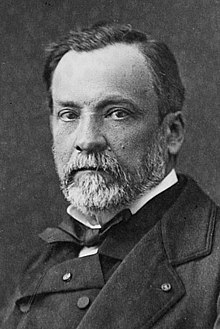
In 1864 Louis Pasteur proved that micro-organisms were responsible for both fermentation and a wide range of spoilage. Dairies across the globe learned valuable lessons from Pasteur about desirable and undesirable micro-organisms, and brewers learned how to get positive results for particular beer styles by careful management of potentially negative organisms such as Enteric bacteria, Kloeckera apiculata, Lactic acid bacteria and Brettanomyces.
But the message took a long time to penetrate much of the wine industry. Over the years, I have visited wineries in which hygiene was quite obviously a very foreign concept. When the "flying winemakers" first went into European wineries on behalf of UK and US buyers, they often said that much of what they had to do involved simply focusing on cleanliness and grape ripeness. These were the "good old days" before "industrial" winemaking allegedly introduced "blandness" to European wine.
I can look back at that time without the use of rose-tinted glasses. I remember cooperatives scheduling harvest delivery dates on the basis of their members' names. Alberto Aranjuez would pick his grapes on September 1st while his neighbour Ziggy Zenovia would have to wait until the 14th. Irrespective of the maturity of either of their crops. Growers who arrived with their grapes at noon would see them oxidize in the midday sun as the winery downed tools for lunch. Work also stopped at weekends. One flying winemaker reported having to break into the bodega where he was overseeing the fermentation of wine for a British supermarket. "They wouldn't give me a key and I wasn't going to leave my vats to their own devices for 48 hours".
Cleanliness was often rudimentary. I met another Australian who was working at a cooperative in south west France during a particularly tricky harvest. Relations with the directeur were not good, he explained. There had been an argument over the need to rinse the hoses, with the co-op boss claiming that "the wine washes them; there's no need to do it with water". To prove his point, the Aussie had found a dead rat ("there were plenty of those") and quietly stuffed it into the end of one of the hoses just before leaving the winery for the night. Next morning, he persuaded the directeur to check the hoses with him and, naturally, "when he picked one up, the rat fell out, straight onto his face".
Most wineries now are far more conscious of the need for hygiene, but the science still seems to be fairly rudimentary, at least when set against other beverages. It is not so long ago that I was given a French Syrah to taste by its producer. What do you think of it? he asked. It's good, but a bit reduced, I responded. Affronted, the grower, said "Non! Il renarde un peu, c'est tout", If you're not familiar with the French verb renarder, nor was I because it fails to feature in my dictionary. I think it means "to fox" or "be like a fox". I know about winery cats, but I 'm still unclear over how foxes fit into Gallic vinification methodology.
Most winemakers seem to know far less about brettanomyces than their beer-making counterparts and, given the nonsense that is talked about the irreplaceability of natural corks, remarkably few appear to be aware that modern closures - Nomacorc, Diam and screwcaps - all now offer controlled versions of the uncontrollable oxygen ingress traditionally associated with bits of cork bark. Wine professionals bang on about "minerality" but as this Wine-Searcher piece illustrates, there is little scientific support for the term having anything to do with the soil in which the grapes are grown. Jamie Goode revealed in a fascinating blog post that the smoky/gunflint "pierre-à-fusil aromas positively associated with some French wines is actually caused by the presence of a sulphur compound called benzenemethanethiol
Which brings me back to that old devil, sulphur - and the drive towards producing wine with little or no SO2. My comments about "natural" wines in previous posts and elsewhere has - quite reasonably, if not entirely accurately - given me a reputation as something of an enemy of that movement, and a sulphorphile. My argument is actually against the term "natural", the holier-than-thou attitude of too many of its supporters, and, most firmly, the sheer amateurishness of much of the winemaking, and the faults that this unsurprisingly engenders.
Believe it or not, I actually welcome the reduction of additives in wine - and would be delighted to see ingredient labelling, as pioneered by the Co-Op chain in the UK and by Ridge Vineyards in the US. Having been very impressed by the quality and reliability of Gerard Bertrand's Naturae range of Zero-SO2 wines, I'm even looking at producing an unsulphured version of our Greener Planet wine this year.
Like Bertrand, and some of the best Zero-SO2 "organic" producers in the US, we're not, however, going to do that without taking a very careful look at how we are going to end up with a wine that is stable and reliable. Like Betrand too, we'll print a "best-before" date on the label, allowing two years or so of cellaring.
On the other hand, would I consider omitting the brimstone from a premium wine that might benefit from a decade or so of patience before being opened? No way. The finest wines I have ever drunk have all owed their survival over decades to SO2. When I raised the issue of longevity with "natural" wine fan Alice Feiring, she replied "who cares" and directed me to old bottles of Chateau Musar. Having just sampled a cloudy, volatile 2000 Musar, all I'll say is that I can think of a long list of other 2000s I'd rather drink.
But 2000 is a long time ago. As Doug Wregg, director of sales and marketing, of UK distributor Les Caves de Pyrene, and one of the strongest leaders of the "natural" movement was quoted as saying in the drinks business. "60-80% of natural wine should be drunk within the first year, after that they fall apart... Most of the wines are light, pale, fizzy and fun. They’re meant for wine bars rather than cellars... It’s a miracle when something lovely happens in the bottle a few years down the line, but I wouldn’t bet my house on it”. Neither his, nor mine.
**********
For anyone interested in knowing what we will be looking to avoid in our unsulphured wine may be interested in this, from an article in Wynboer by Heidi Schoeman of SunBio, Institute for Wine Biotechnology, Stellenbosch University
But the message took a long time to penetrate much of the wine industry. Over the years, I have visited wineries in which hygiene was quite obviously a very foreign concept. When the "flying winemakers" first went into European wineries on behalf of UK and US buyers, they often said that much of what they had to do involved simply focusing on cleanliness and grape ripeness. These were the "good old days" before "industrial" winemaking allegedly introduced "blandness" to European wine.
I can look back at that time without the use of rose-tinted glasses. I remember cooperatives scheduling harvest delivery dates on the basis of their members' names. Alberto Aranjuez would pick his grapes on September 1st while his neighbour Ziggy Zenovia would have to wait until the 14th. Irrespective of the maturity of either of their crops. Growers who arrived with their grapes at noon would see them oxidize in the midday sun as the winery downed tools for lunch. Work also stopped at weekends. One flying winemaker reported having to break into the bodega where he was overseeing the fermentation of wine for a British supermarket. "They wouldn't give me a key and I wasn't going to leave my vats to their own devices for 48 hours".
Cleanliness was often rudimentary. I met another Australian who was working at a cooperative in south west France during a particularly tricky harvest. Relations with the directeur were not good, he explained. There had been an argument over the need to rinse the hoses, with the co-op boss claiming that "the wine washes them; there's no need to do it with water". To prove his point, the Aussie had found a dead rat ("there were plenty of those") and quietly stuffed it into the end of one of the hoses just before leaving the winery for the night. Next morning, he persuaded the directeur to check the hoses with him and, naturally, "when he picked one up, the rat fell out, straight onto his face".
Most wineries now are far more conscious of the need for hygiene, but the science still seems to be fairly rudimentary, at least when set against other beverages. It is not so long ago that I was given a French Syrah to taste by its producer. What do you think of it? he asked. It's good, but a bit reduced, I responded. Affronted, the grower, said "Non! Il renarde un peu, c'est tout", If you're not familiar with the French verb renarder, nor was I because it fails to feature in my dictionary. I think it means "to fox" or "be like a fox". I know about winery cats, but I 'm still unclear over how foxes fit into Gallic vinification methodology.
Most winemakers seem to know far less about brettanomyces than their beer-making counterparts and, given the nonsense that is talked about the irreplaceability of natural corks, remarkably few appear to be aware that modern closures - Nomacorc, Diam and screwcaps - all now offer controlled versions of the uncontrollable oxygen ingress traditionally associated with bits of cork bark. Wine professionals bang on about "minerality" but as this Wine-Searcher piece illustrates, there is little scientific support for the term having anything to do with the soil in which the grapes are grown. Jamie Goode revealed in a fascinating blog post that the smoky/gunflint "pierre-à-fusil aromas positively associated with some French wines is actually caused by the presence of a sulphur compound called benzenemethanethiol
Which brings me back to that old devil, sulphur - and the drive towards producing wine with little or no SO2. My comments about "natural" wines in previous posts and elsewhere has - quite reasonably, if not entirely accurately - given me a reputation as something of an enemy of that movement, and a sulphorphile. My argument is actually against the term "natural", the holier-than-thou attitude of too many of its supporters, and, most firmly, the sheer amateurishness of much of the winemaking, and the faults that this unsurprisingly engenders.
Believe it or not, I actually welcome the reduction of additives in wine - and would be delighted to see ingredient labelling, as pioneered by the Co-Op chain in the UK and by Ridge Vineyards in the US. Having been very impressed by the quality and reliability of Gerard Bertrand's Naturae range of Zero-SO2 wines, I'm even looking at producing an unsulphured version of our Greener Planet wine this year.
Like Bertrand, and some of the best Zero-SO2 "organic" producers in the US, we're not, however, going to do that without taking a very careful look at how we are going to end up with a wine that is stable and reliable. Like Betrand too, we'll print a "best-before" date on the label, allowing two years or so of cellaring.
On the other hand, would I consider omitting the brimstone from a premium wine that might benefit from a decade or so of patience before being opened? No way. The finest wines I have ever drunk have all owed their survival over decades to SO2. When I raised the issue of longevity with "natural" wine fan Alice Feiring, she replied "who cares" and directed me to old bottles of Chateau Musar. Having just sampled a cloudy, volatile 2000 Musar, all I'll say is that I can think of a long list of other 2000s I'd rather drink.
But 2000 is a long time ago. As Doug Wregg, director of sales and marketing, of UK distributor Les Caves de Pyrene, and one of the strongest leaders of the "natural" movement was quoted as saying in the drinks business. "60-80% of natural wine should be drunk within the first year, after that they fall apart... Most of the wines are light, pale, fizzy and fun. They’re meant for wine bars rather than cellars... It’s a miracle when something lovely happens in the bottle a few years down the line, but I wouldn’t bet my house on it”. Neither his, nor mine.
**********
For anyone interested in knowing what we will be looking to avoid in our unsulphured wine may be interested in this, from an article in Wynboer by Heidi Schoeman of SunBio, Institute for Wine Biotechnology, Stellenbosch University
Uncontrolled microbial growth during and after the fermentation of wine can change the chemical composition and ultimately the quality of the end-product. Strains of lactic acid and acetic acid bacteria are usually involved in wine spoilage and can lead to ropiness, volatile acidity, acrolein formation and bitterness, tartaric acid degradation and geranium off-flavour (Du Toit and Pretorius, 2000). Certain strains of lactic acid bacteria (LAB) can also produce biogenic amines and ethyl carbamate precursors. Despite the significance of LAB in malolactic fermentation, it is important to control the presence of naturally occurring LAB in a winemaking environment.